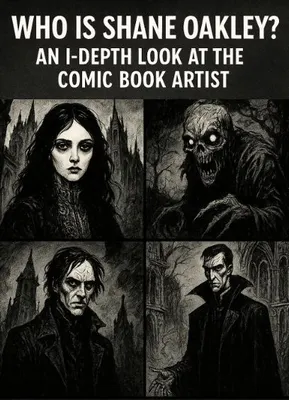
The world of graphic novels and comic books is filled with unique artists. Shane Oakley is one of those artists with a style you can’t forget.
- The Early Life and Artistic Beginnings of Shane Oakley
- Breaking into the Comic Book Industry
- The Unique Artistic Style of Shane Oakley
- Collaboration with Alan Moore: A Defining Partnership
- Notable Works and Published Comics
- Art Style Comparison: Shane Oakley vs. Mike Mignola
- The Influence of Gothic and Expressionist Art
- Modern Projects and Current Endeavors
- The Legacy of Shane Oakley in Comics
He uses a gothic-inspired look that stands out right away. For example, his art often combines dark fantasy, fine details, and dramatic flair.
Because of this, Oakley’s work has made some comics very memorable over the years. This article tells the story of Shane Oakley’s life, career, and his deep influence on comics.
We will look at how he pushes visual storytelling. Also, you’ll learn about his early days and famous collaborations. Shane Oakley’s journey inspires fans and fellow artists alike.
The Early Life and Artistic Beginnings of Shane Oakley
Every artist starts somewhere. For Shane Oakley, his journey began with a love for visual art at a young age. He always liked things that were fantastic and a little bit scary.
For example, he got inspiration from classic comic books, horror movies, and dark stories. These influences became a big part of his style later. He developed a unique visual look, using sharp lines, deep shadows, and a moody feeling.
Before he broke into major comics, Shane Oakley worked on small projects and fan magazines. This let him build a strong portfolio that showed off his raw talent and fresh ideas. In addition, this time of learning allowed him to try new techniques and themes.
His early years were full of hard work. However, this dedication helped him create a style that would make him a popular collaborator later on. By staying persistent, Shane Oakley set the stage for his successful and long comic book career.
Breaking into the Comic Book Industry
Moving from being a hopeful artist to a pro comic book illustrator is not easy. However, Shane Oakley made his mark with a bold, unique style.
He reached his breakthrough in the 1990s, a time full of change for comics, especially in the UK. For example, his early work showed up in big publications and quickly attracted both editors and fans.
Oakley had a strong start with 2000 AD, a legendary British sci-fi comic. Working on these stories helped him prove he could make exciting, action-packed art while keeping his dark and moody feel.
This first success gave him more chances, including work at DC Comics’ Vertigo imprint. Vertigo was famous for its creative, mature comics.
Breaking into Vertigo was a huge deal. In addition, it put him next to other game-changing artists and helped him shape the future of comics.
The Unique Artistic Style of Shane Oakley
Shane Oakley has a style you can spot right away. His art blends gothic horror, expressionism, and detailed line work.
He does not want viewers to just glance at his drawings. Instead, his art grabs your attention. For example, he uses heavy blacks and sharp contrasts. These choices create dramatic tension and a moody feeling. This style fits horror or supernatural stories perfectly.
His characters often look tall and angular. Their faces show strong emotions, like fear or sadness. Instead of aiming for photorealism, Oakley prefers a more creative and stylized look.
This approach lets him bend reality and make scenes hit harder emotionally. Also, his backgrounds are never plain. They are full of textures and complex details, such as elaborate architecture.
In addition, this careful attention to detail means every page is packed with visual treats. Readers who look closely always find more to enjoy in each panel.
Collaboration with Alan Moore: A Defining Partnership
Working with Alan Moore is a dream for many comic book creators. Shane Oakley got this chance when he teamed up with Moore on the Albion miniseries from DC’s WildStorm. This series brought back classic British comic characters, but with a modern twist.
Oakley’s style fit the project perfectly. His gothic look matched the nostalgia and updated feel of the story. Alan Moore’s stories are complex and have many characters. However, Oakley handled these challenges and made the story come alive with his art.
This teamwork impressed both critics and fans. The series made Oakley’s name even bigger in comics. Working with Moore pushed Oakley to be more creative. In addition, it helped his art reach new fans all around the world.
The success of Albion showed Oakley can honor classic comics while making something new and fresh.
Key Takeaways from the Moore-Oakley Collaboration
- Synergy of Styles: Moore’s intricate writing and Oakley’s gothic art created a unique and memorable reading experience.
- Revival of Classics: The project successfully brought back beloved British characters for a modern audience.
- Critical Acclaim: The series was praised by critics and fans, boosting the profiles of both creators.
- Artistic Challenge: The complexity of the story showcased Oakley’s versatility and skill as a visual storyteller.
Notable Works and Published Comics
After Albion, Shane Oakley built an impressive portfolio across many genres and publishers.
His artwork often appears in anthologies and special projects. Here, his unique style really stands out.
One of his biggest projects was with Neil Gaiman. Oakley created new illustrations for a special edition of The Sandman: The Dream Hunters. This was a big honor for him because The Sandman universe is one of the most respected in comics.
His signature look brought fresh life to the story. In addition, working with Gaiman helped Oakley reach a wider group of fans.
Shane Oakley has many other important works, too. For example, he contributed to 2000 AD and worked on stories like Judge Dredd and more sci-fi adventures.
He also co-created Channel Evil with Alan Grant. This series explores horror and pokes fun at the media world. Oakley’s art fits perfectly with these themes.
In addition, he helped bring back Mister X, a classic indie comic. His style matched the noir, retro-futuristic feel of the story.
Shane Oakley also added his touch to Cthulhu Tales. Here, he drew stories inspired by the spooky world of H.P. Lovecraft.
Each of these projects shows Oakley’s wide range of skills. He always adapts his style to fit the story. However, he never loses what makes his art unique.
- 2000 AD: Contributions to various stories, including Judge Dredd and other sci-fi tales.
- Channel Evil: A creator-owned project with Alan Grant that delves into horror and media satire.
- Mister X: Work on the revival of the classic indie comic, where his style complemented the noir, retro-futuristic setting.
- Cthulhu Tales: Illustrations for stories inspired by the cosmic horror of H.P. Lovecraft.
Each of these projects highlights Oakley’s versatility and his ability to adapt his style to different narrative needs while remaining true to his artistic identity.
Art Style Comparison: Shane Oakley vs. Mike Mignola
Every artist has their own style. However, you can compare their work to better understand it.
For example, Shane Oakley is often mentioned with Mike Mignola, the creator of Hellboy. Both are known for using strong shadows and gothic themes.
However, their styles are different in several ways.
Feature | Shane Oakley | Mike Mignola |
|---|---|---|
Line Work | Intricate, sharp, and often chaotic lines. | Bold, blocky, and minimalist shapes. |
Character Design | Elongated, angular figures with expressive details. | Stout, geometric characters with simplified features. |
Use of Shadow | Creates complex, textured darkness and atmosphere. | Uses large, flat areas of black to define forms. |
Overall Mood | Tends towards a more frenetic, detailed horror. | Often described as a more stoic, pulp-noir horror. |
Level of Detail | High level of detail in backgrounds and textures. | “Less is more” approach, focusing on essential elements. |
This comparison shows that while both artists excel at creating moody, shadow-filled worlds, their execution and artistic philosophies are distinct. Oakley’s work leans into detailed complexity, while Mignola’s is a masterclass in powerful simplicity.
The Influence of Gothic and Expressionist Art
To really understand Shane Oakley and his work, you need to know his influences. His style is rooted in Gothic art and German Expressionism.
For example, you can see the Gothic touch in his use of dark scenes and moody atmospheres. He likes to add detailed elements that remind you of Gothic buildings. In addition, you will notice a love for the eerie and macabre.
This kind of art values emotion and drama over strict realism. Because of this, Oakley’s style is a perfect fit for horror and fantasy stories. He builds his artwork on these traditions, making every scene feel full of feeling and energy.
The impact of German Expressionism is clear in Shane Oakley’s work. This movement started in the early 1900s. Expressionist artists wanted to show emotions, not just real life.
For example, they used twisted shapes, bright colors, and bold brushstrokes. These choices helped them create feelings like fear or anxiety in their art.
Oakley uses the same ideas in his comics. His characters are not always drawn naturally. Sometimes, they look strange or dramatic to fit the story’s mood. In addition, his scenes have lots of movement and energy, making the emotions stronger.
This link to famous art styles helps set Oakley apart from many other comic book artists. His art fits into a bigger story of art history. If you want to learn more, you can visit educational sites like the National Gallery of Art.
Modern Projects and Current Endeavors
Shane Oakley has spent decades in the comic industry, but he still creates new and exciting work. He uses modern platforms to connect with his audience. For example, he often shares sketches, works-in-progress, and news on social media.
Fans like seeing behind the scenes of his creative process. In addition, Oakley chooses projects that match his unique style. These include cover art, special commissions, and stories in anthologies.
His passion for storytelling and illustration is as strong as ever. As comics keep changing, artists like Oakley are always in high demand. He inspires a new generation of artists who love dark, expressive, and creative comics.
Also, if you want to follow trends in the creative world, you might enjoy Trand Magazine. This publication covers many topics in the arts.
The Legacy of Shane Oakley in Comics
The legacy of an artist is measured by their influence and lasting impact. Shane Oakley has made a unique place for himself in the world of comics.
He is celebrated for his bold vision and the way he creates dark, atmospheric worlds. For example, his work adds depth and variety to comics everywhere. There is a strong audience for art that feels deep, moody, and full of detail.
Aspiring artists often turn to Shane Oakley for inspiration. He shows you can have a career by staying true to your style. In addition, his collaborations with famous writers and his work on key titles have made his mark even deeper.
His legacy is not just the art he drew. It is also the way he inspires other creators and the memories he gives to readers. If you want to explore comic history, the U.S. Library of Congress is a great resource.
Frequently Asked Questions (FAQ)
Q1: What is Shane Oakley best known for?
A1: Shane Oakley is best known for his unique gothic art style. He often works on famous comic projects, such as Albion with writer Alan Moore.
In addition, he illustrated The Sandman: The Dream Hunters for Neil Gaiman. This work also showed his signature style and made him even more popular.
Q2: Which comic publishers has Shane Oakley worked with?
A2: Shane Oakley has worked with several big comic publishers. For example, he made art for 2000 AD and DC Comics.
He worked on the Vertigo and WildStorm imprints, which are parts of DC. In addition, he has teamed up with independent publishers for creator-owned projects.
These projects let Oakley show off his style while working with many writers and editors.
Q3: What are the main influences on Shane Oakley’s art style?
A3: Shane Oakley’s style draws from Gothic art and German Expressionism. For example, he also finds inspiration in classic horror movies and artists who use strong, stylized looks.
These influences give his art a dark, moody feeling. In addition, his work is always highly detailed and full of emotion.