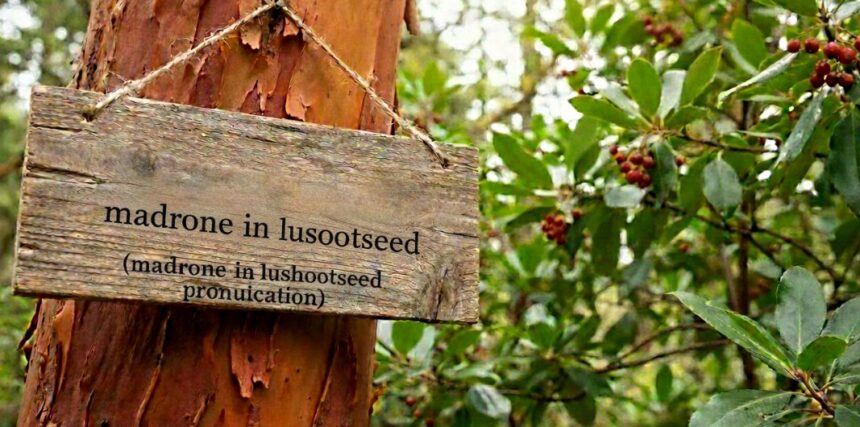
The Pacific Madrone, a striking tree with its smooth, reddish-brown bark and vibrant green leaves, is a cornerstone of the Pacific Northwest ecosystem. But its significance goes far beyond its visual appeal. For the Coast Salish peoples who speak Lushootseed, this tree is woven into their cultural and linguistic heritage. Understanding the madrone in Lushootseed pronunciation is more than a linguistic exercise; it’s a step toward appreciating the deep connection between land, language, and people. This guide will explore the madrone’s cultural importance, delve into the nuances of the Lushootseed language, and provide a clear path to pronouncing its name correctly.
- What is the Lushootseed Language?
- The Cultural Significance of the Madrone Tree
- Pronouncing the Lushootseed Word for Madrone
- A Guide to Lushootseed Phonetics
- The Role of Language in Cultural Preservation
- Breaking Down the Pronunciation: A Step-by-Step Guide
- Madrone vs. Other Native Trees: A Comparison
- Resources for Learning Lushootseed
- The Connection Between Language and Ecology
- Respectful Engagement with Indigenous Languages
- Conclusion
This journey will not only teach you a new word but also offer a window into a rich cultural world. We will cover the tree’s botanical features, its role in traditional stories, and the practical aspects of learning Lushootseed. By the end, you’ll have a greater appreciation for both the magnificent madrone and the language that has honored it for centuries.
What is the Lushootseed Language?
Lushootseed is the ancestral language of the Coast Salish peoples of the Puget Sound region in Washington. It is part of the Salishan language family, a group of languages spoken from British Columbia down to Oregon. Historically, Lushootseed was spoken by numerous tribes, including the Duwamish, Suquamish, Nisqually, and Snoqualmie. The language exists in two primary dialects: Northern Lushootseed and Southern Lushootseed. While there are slight variations between them, speakers of both dialects can generally understand one another. For generations, Lushootseed was the medium for storytelling, spiritual practices, governance, and daily life. It is a language deeply tied to the specific geography of the Puget Sound, with words and concepts that reflect the unique environment of rivers, saltwater, and forests. Learning a term like the madrone in Lushootseed pronunciation connects us directly to this place-based knowledge.
The Cultural Significance of the Madrone Tree
The madrone tree, known botanically as Arbutus menziesii, is more than just a plant for the Lushootseed-speaking peoples. It holds a significant place in their traditional ecological knowledge and cultural narratives. The tree’s berries were a source of food, although often used more for medicinal purposes or consumed in moderation. Its hard, durable wood was valuable for creating tools and utensils. Even the bark and leaves had uses in traditional medicine, often prepared to treat colds or skin ailments. Beyond its practical applications, the madrone features in stories and legends, sometimes serving as a symbol of resilience and connection to the spirit world. Its unique peeling bark, which reveals a new, smooth layer underneath, is often seen as a metaphor for renewal and transformation. This deep-rooted relationship highlights why understanding the tree’s name in the local indigenous language is an act of respect and cultural recognition.
Pronouncing the Lushootseed Word for Madrone
The Lushootseed name for the Pacific Madrone tree is qəbálqs. Approaching the madrone in Lushootseed pronunciation requires an understanding of sounds that may be unfamiliar to English speakers. Lushootseed has a rich phonetic inventory, including sounds that don’t exist in English. Let’s break down the pronunciation of qəbálqs:
- qə: The “q” represents a sound made further back in the throat than the English “k.” It’s a uvular stop, similar to the sound at the beginning of the Arabic word “Qatar.” The “ə” is the schwa sound, like the “a” in “about.”
- bá: The “b” is similar to the English “b,” but it is often pronounced with less aspiration. The “á” is an “ah” sound, as in “father,” and the accent mark indicates that this syllable is stressed.
- lqs: This ending is the most challenging part for English speakers. The “l” is followed by a voiceless “q” (the same uvular stop) and an “s” sound. It’s a consonant cluster that requires practice to pronounce smoothly.
Putting it all together, the word sounds something like “k-uh-BAHL-k-s,” with the initial “k” sound produced deep in the throat. Listening to native speakers is the best way to grasp the subtleties.
A Guide to Lushootseed Phonetics
To truly master the madrone in Lushootseed pronunciation, it helps to have a basic grasp of Lushootseed phonetics. The language uses a specialized alphabet to represent its unique sounds accurately. This alphabet, developed by linguists in collaboration with tribal elders, includes symbols that may look foreign. For example, the “č” represents the “ch” sound in “church,” while “š” represents the “sh” sound in “shoe.” The apostrophe (‘) after a consonant, as in p’, indicates an ejective sound—a consonant pronounced with a simultaneous pop of air from the glottis.
One of the most distinct features is the use of uvular consonants like the “q” in qəbálqs. These are produced by raising the back of the tongue against the uvula. Learning to distinguish between a “k” (a velar stop) and a “q” (a uvular stop) is a key step. Resources from institutions like the University of Washington offer detailed phonetic charts and audio examples that can greatly aid learners.
Key Takeaways
- Lushootseed has a unique alphabet to represent sounds not found in English.
- Uvular consonants, like “q,” are made in the back of the throat.
- Ejective consonants, marked with an apostrophe, involve a popping sound.
- Listening to native speakers is crucial for accurate pronunciation.
The Role of Language in Cultural Preservation
Language is the lifeblood of culture. It carries history, stories, values, and a unique way of seeing the world. For Indigenous communities like the Coast Salish, the Lushootseed language is a critical component of their identity and sovereignty. The effort to revitalize Lushootseed is an effort to reclaim a heritage that was systematically suppressed through colonization and assimilation policies. When younger generations learn the language of their ancestors, they connect with traditional knowledge about the environment, spirituality, and social structures. Terms for local plants, animals, and places are not just labels; they are embedded with generations of observation and wisdom. Therefore, taking the time to learn the proper madrone in Lushootseed pronunciation is a small but meaningful contribution to these revitalization efforts. It shows respect for the original stewards of the land and acknowledges the enduring presence of their culture.
Breaking Down the Pronunciation: A Step-by-Step Guide
Mastering the pronunciation of qəbálqs can feel daunting, but breaking it down into smaller steps can make it manageable.
- Isolate the Uvular ‘q’: Start by trying to make the “q” sound. Begin by saying “k,” and notice where your tongue touches the roof of your mouth (the velum). Now, try to move that point of contact further back, toward your uvula. It might feel like you are gargling without water. Practice this sound by itself.
- Practice the Schwa ‘ə’: This is the easiest sound. It’s the unstressed vowel sound in many English words, like the ‘u’ in “supply” or the ‘a’ in “sofa.” Combine it with the ‘q’ to say qə.
- The Stressed Syllable ‘bál’: This part is more straightforward. Pronounce “b” as you normally would, followed by the “ah” sound in “spa.” The ‘l’ is also similar to English. The key here is to place the stress on this syllable: bál.
- The Final Cluster ‘qs’: This is the trickiest part. After the ‘l’ from the previous syllable, you must produce the uvular ‘q’ sound again, immediately followed by an ‘s’ sound. Practice saying “l-q-s” slowly, ensuring the ‘q’ is voiceless and made deep in your throat.
- Putting It All Together: Combine the parts: qə-bál-qs. Start slowly and gradually increase your speed. Record yourself and compare it to audio from native speakers. Repetition is key to building muscle memory for these new sounds.
Madrone vs. Other Native Trees: A Comparison
The Pacific Northwest is home to many iconic trees, each with its own name and significance in Lushootseed. Understanding the madrone in context helps to appreciate its unique place.
Feature | Madrone (qəbálqs) | Western Red Cedar (x̌payʔ) | Douglas Fir (čəbidac) |
|---|---|---|---|
Bark | Smooth, reddish-orange, peels in thin sheets | Fibrous, gray-brown, stringy | Thick, deeply furrowed, grayish-brown |
Leaves | Broadleaf evergreen, thick, waxy, oval-shaped | Scale-like, flat sprays | Needles, single, soft with blunt tips |
Cultural Use | Medicinal, food (berries), hard wood for tools | “Tree of Life,” wood for houses, canoes, clothing, spiritual items | Strong wood for construction, pitch for sealant |
Spiritual Role | Symbol of renewal and transformation | Central to spiritual practices, a gift from the creator | Often associated with protection and strength |
This comparison shows that while all these trees are vital, the madrone’s role and characteristics are distinct. This reinforces the importance of knowing its specific name, qəbálqs.
Resources for Learning Lushootseed
Fortunately, for those interested in going beyond the madrone in Lushootseed pronunciation, there are growing resources available for learning the language. Tribal language programs are at the forefront of this effort. The Puyallup Tribe and the Tulalip Tribes have invested heavily in language revitalization, creating curricula, apps, and classes for their members and the public. Universities have also played a supportive role. The University of Washington Department of American Indian Studies offers Lushootseed language courses and has published valuable resources, including the Lushootseed Dictionary.
Online, you can find websites and YouTube channels dedicated to teaching the language. These often feature recordings of elders and fluent speakers, which are invaluable for learning correct pronunciation. Apps like the “Tulalip Lushootseed” app provide vocabulary, phrases, and audio clips on your phone. Engaging with these materials is a fantastic way to support the language’s revitalization and deepen your understanding of the region’s Indigenous culture. For a broader look at trends in cultural preservation, one might even explore a publication like Trand Magazine.
The Connection Between Language and Ecology
The Lushootseed language is a testament to the intimate relationship between a people and their environment. The vocabulary is rich with precise terms for the plants, animals, weather patterns, and landforms of the Puget Sound. This is not just a list of nouns; it’s a system of knowledge. The names often describe the plant’s function, appearance, or relationship to other beings. For example, a name might indicate what time of year a plant is ready to be harvested or what other species are found near it. This integrated knowledge system is known as Traditional Ecological Knowledge (TEK).
Learning the Lushootseed name for the madrone tree, qəbálqs, is a small entry point into this vast body of knowledge. It reminds us that the land is not a silent backdrop but an active participant in culture and language. When a language is lost, this deep ecological wisdom is also threatened. Efforts to document and revitalize languages like Lushootseed are therefore also acts of environmental conservation, preserving knowledge that is crucial for sustainable living.
Respectful Engagement with Indigenous Languages
When learning and using words from an Indigenous language, it is crucial to do so with respect and awareness. The first step is acknowledging that these languages belong to living communities. Avoid using words as curiosities or decorative elements without understanding their context. Acknowledge the source of your knowledge, crediting the tribes and speakers who have kept the language alive. When practicing something like the madrone in Lushootseed pronunciation, approach it with humility, recognizing that you are a guest in another linguistic world. If you have the opportunity to learn from a native speaker or a tribal language program, listen more than you speak. Support these programs financially if you can. The goal is not appropriation but appreciation, and to be an ally in the fight for linguistic and cultural sovereignty.
Conclusion
Learning how to pronounce qəbálqs, the Lushootseed word for the madrone tree, is a journey that takes us far beyond simple phonetics. It opens a door to the rich cultural heritage of the Coast Salish peoples and the deep ecological wisdom embedded in their language. We’ve explored the cultural significance of the madrone, broken down the steps to its pronunciation, and placed it within the broader context of language revitalization. The connection between the land and its original language is powerful and profound.
By taking the time to learn, you are not just memorizing a word. You are honoring a culture, acknowledging a history, and supporting the enduring spirit of the Lushootseed-speaking peoples. We encourage you to seek out the resources mentioned, listen to the voices of fluent speakers, and continue to explore the beautiful intersection of language, culture, and nature in the Pacific Northwest.
Frequently Asked Questions (FAQ)
Q1: What is the Lushootseed word for the madrone tree?
A1: The Lushootseed word for the madrone tree is qəbálqs.
Q2: Why is the pronunciation of Lushootseed words difficult for English speakers?
A2: Lushootseed contains several sounds not found in English, such as uvular consonants (made in the back of the throat) and ejective consonants (made with a pop of air). These require practice to master.
Q3: Where can I hear the correct pronunciation of qəbálqs?
A3: The best resources are tribal language program websites, such as those from the Tulalip or Puyallup Tribes, and university archives. Language learning apps like the “Tulalip Lushootseed” app also include audio from native speakers.