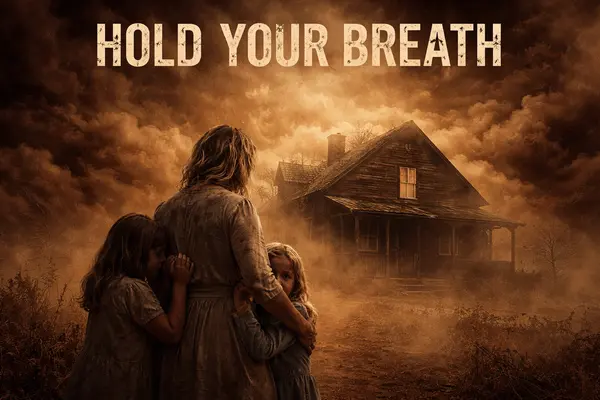
The 2024 horror-thriller Hold Your Breath, starring the incomparable Sarah Paulson, has left audiences gasping for air and searching for answers. Set against the suffocating backdrop of 1930s Oklahoma during the Dust Bowl, the film weaves a complex tapestry of historical drama, psychological tension, and supernatural folklore. It is a movie that demands attention not just for its scares, but for its intricate layering of reality and delusion. If you walked away from the credits rolling feeling unsure about what was real and what was imagined, you are not alone. In this article, we will get the ending of hold your breath explained, break down the symbolism, and explore the terrifying legend of the Grey Man.
- The Haunting Atmosphere of 1930s Oklahoma
- Unpacking the Plot: Survival in the Dust
- Who is the Grey Man? The Legend Decoded
- Character Analysis: Sarah Paulson’s Descent
- Psychological Thriller or Supernatural Horror?
- Key Themes Explored in the Movie
- Cinematic Techniques That Build Tension
- Comparing Hold Your Breath to Other Horror Films
- Historical Accuracy: The Real Dust Bowl
- Final Verdict: Is It Worth Watching?
- Conclusion
- FAQ
The Haunting Atmosphere of 1930s Oklahoma
The setting of Hold Your Breath is arguably its most important character. The film takes place in the heart of the Dust Bowl era, a time of devastating ecological disaster in the American Midwest. The constant, swirling dust isn’t just a visual effect; it is a suffocating force that isolates the characters from the outside world. Margaret, played by Sarah Paulson, struggles to protect her two daughters, Rose and Ollie, on their failing farm while her husband is away looking for work. The isolation is palpable, creating a pressure cooker environment where sanity is easily frayed.
This historical backdrop provides the perfect foundation for horror. The real-life “black blizzards” of the 1930s were terrifying events that blocked out the sun and caused “dust pneumonia,” a fatal condition that clogged the lungs. By grounding the horror in this gritty reality, the film makes the supernatural elements feel plausible. When the characters fight to breathe, the audience feels that struggle viscerally. The environment acts as a physical manifestation of Margaret’s internal state: clouded, choking, and increasingly dangerous. It sets the stage for a narrative where the threat is everywhere—in the air, in the ground, and perhaps, in their minds.
Unpacking the Plot: Survival in the Dust
To get the plot of hold your breath explained, we must look at the family dynamic. Margaret is a grieving mother, still mourning the death of a third daughter, Ada. This grief is the crack in her armor that the film’s horror exploits. The story kicks into high gear with the introduction of the “Grey Man,” a drifter folklore legend whispered about by the locals. According to the story, the Grey Man is a spirit carried by the dust who can enter a person’s body and make them do terrible things. When a stranger actually arrives at their farm claiming to know her husband, Margaret’s paranoia spikes.
The narrative creates a constant guessing game. Is the stranger truly a threat, or is Margaret’s fear projecting danger onto him? As the dust storms intensify, so does Margaret’s erratic behavior. She becomes obsessed with sealing the house, stuffing cracks with rags, and keeping her daughters close—too close. The arrival of the stranger serves as a catalyst, pushing Margaret from protective mother to potential aggressor. The film masterfully blurs the timeline, using sleepless nights and medication to make the viewer question Margaret’s reliability as a narrator. We see the world through her bloodshot eyes, and it is a terrifying place to be.
Who is the Grey Man? The Legend Decoded
The entity known as the Grey Man is central to understanding the film’s mystery. In the context of hold your breath explained, the Grey Man serves as a metaphor for the inescapable nature of grief and guilt. The legend says he infiltrates you through the dust you breathe—essentially, if you exist in this environment, you are vulnerable. He is described not necessarily as a monster with claws, but as a presence that hollows you out, turning loved ones into strangers. This mirrors the effects of the harsh environment they are living in, which stripped families of their hope and humanity.
However, the film plays with the idea that the Grey Man might be real. There are moments where shadows move independently, and the dust seems to have a sentient quality. Whether he is a literal spirit haunting the Oklahoma plains or a shared delusion born from extreme stress, the Grey Man represents the “other.” He is the embodiment of the fear of the unknown. For Margaret, he becomes the scapegoat for her unraveling mind. If the Grey Man is real, then she isn’t responsible for her actions; he is. This legend allows the film to explore how folklore is often created to explain away trauma that is too difficult to face directly.
The Symbolism of Dust and Decay
The dust in the film is relentless, coating every surface and filling every lung. Symbolically, the dust represents the accumulation of secrets and past traumas that Margaret is trying to keep out. No matter how hard she scrubs or how tightly she seals the windows, the dust gets in. This parallels her inability to process the death of her daughter Ada. Just as the dust buries the farm, her grief is burying her sanity. The decay of the farm mirrors the decay of her mental state, creating a unified image of destruction that is both internal and external.
Character Analysis: Sarah Paulson’s Descent
Sarah Paulson delivers a powerhouse performance as Margaret, a woman teetering on the edge of oblivion. To fully have hold your breath explained, one must analyze the nuances of her acting. Paulson portrays Margaret not as a villain, but as a tragic figure. Her descent into madness is gradual. Initially, she is a fierce protector, a mother doing her best in impossible circumstances. But as the film progresses, her protection morphs into possession. She begins to view her children not as people to be raised, but as objects to be hoarded and shielded from a world she deems entirely hostile.
The film uses close-ups of Paulson’s face to convey her internal shifting. We see the twitch of an eye, the trembling of a hand, and the frantic rhythm of her breathing. Margaret creates a reality where she is the only thing standing between her daughters and death, but tragically, she becomes the very danger she fears. Her insomnia and misuse of sleeping draughts exacerbate her hallucinations, making her an unreliable narrator. The audience is forced to empathize with her pain while simultaneously being horrified by her actions. It is a delicate balance that anchors the emotional weight of the movie.
The Role of Grief in Margaret’s Unraveling
Grief is the engine that drives the horror in Hold Your Breath. Margaret’s previous loss of Ada is the wound that never healed. In psychological terms, this is often referred to as “complicated grief,” where the bereaved cannot resume normal life. Margaret sees signs of danger everywhere because she failed to protect one child, and she is determined not to fail again. This overwhelming guilt distorts her perception of reality, transforming innocent events into threatening omens. The film suggests that unprocessed grief is as deadly as any supernatural monster.
Psychological Thriller or Supernatural Horror?
One of the biggest debates among viewers is whether the events are supernatural or psychological. This ambiguity is intentional. If you want the ending of hold your breath explained, you have to pick a side, though the film supports both. On one hand, the environmental stress, isolation, and sleep deprivation suggest Margaret is suffering from acute psychosis. The “Grey Man” could simply be a hallucination. On the other hand, certain physical events—like the impossible movement of the dust or the specific knowledge the stranger possesses—hint that something paranormal is truly at play.
Evidence for the Supernatural
Supporters of the supernatural theory point to the dust. It moves with intention, almost like a swarm of insects rather than weather particles. Furthermore, the stranger who visits the farm seems to know things about Margaret’s past that he shouldn’t naturally know. There are also moments where the children see things too, suggesting that the vision isn’t limited to Margaret’s mind alone. If the children are reacting to the same phenomena, it lends credibility to the existence of the Grey Man as a genuine entity haunting the land.
Evidence for Psychological Breakdown
Conversely, the psychological argument is strong. Margaret is inhaling toxic amounts of dust and abusing sedatives. Historically, “dust pneumonia” caused high fevers and delirium. It is entirely possible that the entire narrative is viewed through the distorted lens of a dying, feverish woman. The “Grey Man” is a convenient projection of her guilt. When she attacks the “threat,” she is often attacking empty air or, tragically, people trying to help her. This interpretation grounds the film in the tragic reality of mental illness exacerbated by extreme environmental hardship.
Key Themes Explored in the Movie
Hold Your Breath touches on several profound themes beyond simple scares. Motherhood and Control is a major focus; the film asks where the line is between protecting your children and stifling them. Margaret’s love becomes suffocating, literally and metaphorically. Another key theme is Environmental Horror. The earth itself has turned against the characters, reflecting modern anxieties about climate change and ecological collapse. The film posits that nature is a force that cannot be tamed, only endured.
Additionally, the movie explores The Fragility of Reality. When isolated, our grip on what is true can slip. The characters in the movie have no access to the outside world—no radio, no neighbors, no mail. In this vacuum, their reality becomes whatever Margaret says it is. This power dynamic is terrifying, highlighting how easily truth can be manipulated by those in authority, especially within a family unit. For more discussions on psychological themes in modern media, you might check out lifestyle analyses on sites like Trand Magazine.
Cinematic Techniques That Build Tension
The directors utilize specific cinematic techniques to heighten the anxiety. The sound design is particularly effective; the howling wind is a constant, droning noise that wears down the viewer just as it wears down the characters. The sound of breathing—labored, wheezing, panicked—is amplified, making the act of respiration feel like a struggle. Visually, the color palette is washed out, dominated by browns, beiges, and grays, reflecting the lifeless landscape.
Camera angles are often claustrophobic, shooting from low angles or through obscured glass to mimic the feeling of being trapped. The use of practical effects for the dust adds a gritty texture that CGI often lacks. You can almost feel the grit in your teeth while watching. These technical choices ensure that the audience never feels safe or clean. The editing is jagged and sometimes disorienting, mirroring Margaret’s fractured psyche and ensuring the viewer remains as confused and on edge as the protagonist.
Comparing Hold Your Breath to Other Horror Films
To better understand where this movie fits in the genre, it helps to compare it to similar films that blend psychological drama with horror.
Feature | Hold Your Breath (2024) | The Babadook (2014) | The Wind (2018) |
|---|---|---|---|
Primary Antagonist | The Grey Man / Dust / Grief | Mister Babadook / Grief | Demons / Isolation |
Setting | 1930s Oklahoma Dust Bowl | Modern Suburban Home | 19th Century Frontier |
Central Theme | Motherhood & Environmental Collapse | Motherhood & Depression | Female Isolation & Paranoia |
Psychological Ambiguity | High (Real vs. Imagined) | High (Monster is Metaphor) | High (Demons vs. Madness) |
Pacing | Slow burn, atmospheric | Slow build to chaotic climax | Non-linear, disjointed |
As seen in the table, Hold Your Breath shares DNA with The Babadook in its treatment of grief as a monster, and The Wind in its use of a hostile historical setting.
Historical Accuracy: The Real Dust Bowl
While the horror elements are fictional, the historical setting of Hold Your Breath is rooted in fact. The Dust Bowl was a period of severe dust storms that greatly damaged the ecology and agriculture of the American and Canadian prairies during the 1930s. The phenomenon was caused by a combination of natural drought and poor farming practices. For families like Margaret’s, the “Black Sunday” storms were apocalyptic events.
According to resources like the Library of Congress, the psychological toll on residents was immense. The constant intake of dust caused physical illness, but the isolation and economic ruin caused widespread depression and suicide. The film captures this despair accurately. The masks the characters wear, the wet sheets over the windows, and the sheer desperation for rain are all historically accurate details that ground the horror in a sad, tangible reality.
Final Verdict: Is It Worth Watching?
If you enjoy slow-burn horror that relies on atmosphere rather than jump scares, Hold Your Breath is a must-watch. Sarah Paulson’s performance alone is worth the price of admission. She anchors the film with a raw intensity that makes even the slower moments engaging. However, if you prefer fast-paced slashers or explicit monster movies, you might find the ambiguity frustrating.
The film requires patience. It asks the viewer to sit in the discomfort and suffocation alongside the characters. It is not a “popcorn horror” flick; it is a somber, heavy drama wrapped in horror aesthetics. The ending, which we have had hold your breath explained in terms of its thematic weight, leaves a lingering sense of dread that stays with you long after the screen goes black. It is a solid entry into the genre of “elevated horror.”
Conclusion
Hold Your Breath is a chilling exploration of how trauma can warp our reality. By blending the historical nightmare of the Dust Bowl with the folklore of the Grey Man, the film creates a unique horror experience. Whether you believe the threat was supernatural or purely psychological, the devastation wrought on the family is undeniably real. The movie serves as a grim reminder that sometimes, the scariest monsters are the ones we carry inside us, fed by grief and isolation.
Key Takeaways
- Ambiguity is Key: The film intentionally blurs the line between the supernatural Grey Man and Margaret’s psychosis.
- Historical Setting: The 1930s Dust Bowl provides a claustrophobic and deadly backdrop that enhances the horror.
- Grief as a Villain: The true antagonist of the film is unprocessed grief and the guilt of a mother who couldn’t save her child.
- Sarah Paulson shines: The lead performance is the anchor of the film, conveying the terror of a mind unraveling.
FAQ
Q: Is the Grey Man a real legend?
A: The “Grey Man” in the movie appears to be a fictional creation for the film, though it draws inspiration from various “boogeyman” figures found in folklore, such as the Scottish “Am Fear Liath Mòr” (Big Grey Man), though the movie adapts it to the American Dust Bowl context.
Q: What is the rating of the movie?
A: Hold Your Breath is rated R for some violence and disturbing images, typical for psychological horror films.
Q: Where can I watch Hold Your Breath?
A: The film was released as a Hulu Original in the United States.
Q: Does the dog die in Hold Your Breath?
A: Without spoiling too much, the film contains moments of animal peril which contribute to the darkening tone of the narrative.
Q: Is Hold Your Breath based on a true story?
A: No, the specific plot is fictional, but the historical context of the Dust Bowl and the suffering of families during that era are based on real historical events. You can learn more about mental health impacts of such events at sources like the National Institute of Mental Health.